
إعلانات
We are thrilled to share this comprehensive step-by-step guide to training and certification programs with you.
Building a career as a heavy equipment operator in the United States opens doors to stable employment and good wages.
Our guide walks you through each stage of your journey.You will learn about different training paths available to you.
The construction industry needs skilled operators right now.
Getting certified shows employers you take your work seriously. We want to help you understand all your options.
إعلانات
This step-by-step guide to training and certification programs covers free resources and paid programs.
You will find information about schools near you and online courses.
Our mission is simple. We believe everyone deserves access to quality training information.
إعلانات
Whether you are just starting out or looking to add new skills, this guide meets you where you are. We present everything in clear, easy-to-follow steps.
By the end of this guide, you will know exactly what to do next in your career path.
Let’s get started on your path to becoming a certified heavy equipment operator. Your future in construction begins here.
Understanding the Industry Landscape
The construction and heavy equipment industry is growing fast in the United States. Workers who want to build a strong career path need to understand how this field works.
Learning about the current market helps you make smart choices about your future. We want to help you see why getting proper training matters so much in today’s job market.
The demand for skilled workers in construction continues to rise. Companies across the country need qualified professionals who can operate complex machinery safely.
Understanding the industry landscape puts you ahead of other job seekers. You gain knowledge about what employers want and what skills matter most.
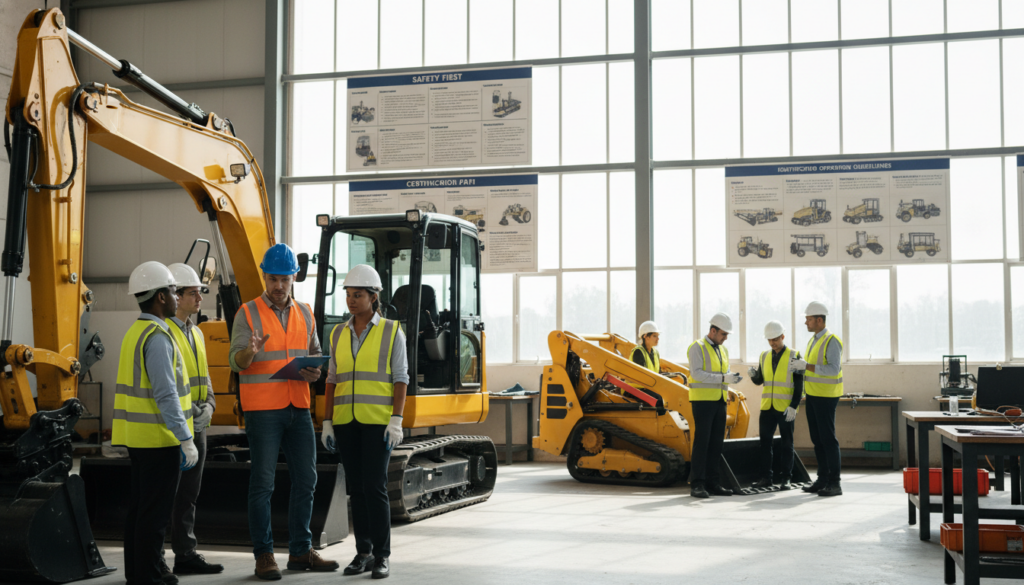
Overview of Heavy Machinery Operator Job Training
Heavy machinery operator job training gives workers the skills they need for construction sites. This training covers operating different types of equipment like bulldozers, excavators, and cranes. Learning these skills opens doors to many job opportunities across the United States.
Quality training programs teach you both classroom knowledge and hands-on experience. You learn equipment basics, safety rules, and real-world techniques. Most programs take weeks or months to complete. After finishing, you get certified and ready to work on actual job sites.
Importance of Safety Standards in the United States
Safety rules protect workers and keep job sites running well. The Occupational Safety and Health Administration (OSHA) sets strict standards that all construction companies must follow. These rules cover equipment operation, site conditions, and worker protection.
Learning safety standards makes you a better employee. Employers want workers who understand and follow safety rules. Companies value safety-conscious workers because they prevent accidents and injuries. Following these standards keeps you, your coworkers, and the public safe.
- OSHA requires proper training before operating heavy equipment
- Safety certifications show employers you take hazards seriously
- Following safety rules reduces workplace injuries by up to 50 percent
- Regular safety training keeps your skills current and sharp
Taking safety seriously gives you job security and respect on the job site. Employers trust workers who know safety rules inside and out. This knowledge makes you stand out when applying for positions and helps you earn better pay.
دليل خطوة بخطوة لبرامج التدريب والشهادات
Starting your journey toward becoming a certified equipment operator requires understanding the clear pathway from beginner to professional. We will walk you through each stage of the training process so you know exactly what to expect and can plan your career move with confidence. This structured approach helps you stay on track and avoid missing any critical requirements.
The progression from novice to certified professional involves several key phases. Each phase builds on the previous one, creating a solid foundation for your new career in heavy equipment operation.
The Training Progression Framework
Your training journey typically follows a logical sequence that takes between three months and one year to complete. The timeline depends on your chosen equipment type and whether you attend full-time or part-time courses.
| Training Phase | مدة | Focus Areas | Key Milestones |
|---|---|---|---|
| Phase 1: Foundational Knowledge | 2-4 weeks | Safety basics, equipment parts, operator fundamentals | Complete safety orientation |
| Phase 2: Practical Operation | 4-8 weeks | Hands-on equipment experience, maneuvering techniques | Log operational hours |
| Phase 3: Advanced Skills | 3-6 weeks | Complex tasks, problem-solving, maintenance basics | Pass practical assessments |
| Phase 4: Certification Testing | 1-2 weeks | Written exams, practical demonstrations, safety evaluations | Earn official certification |
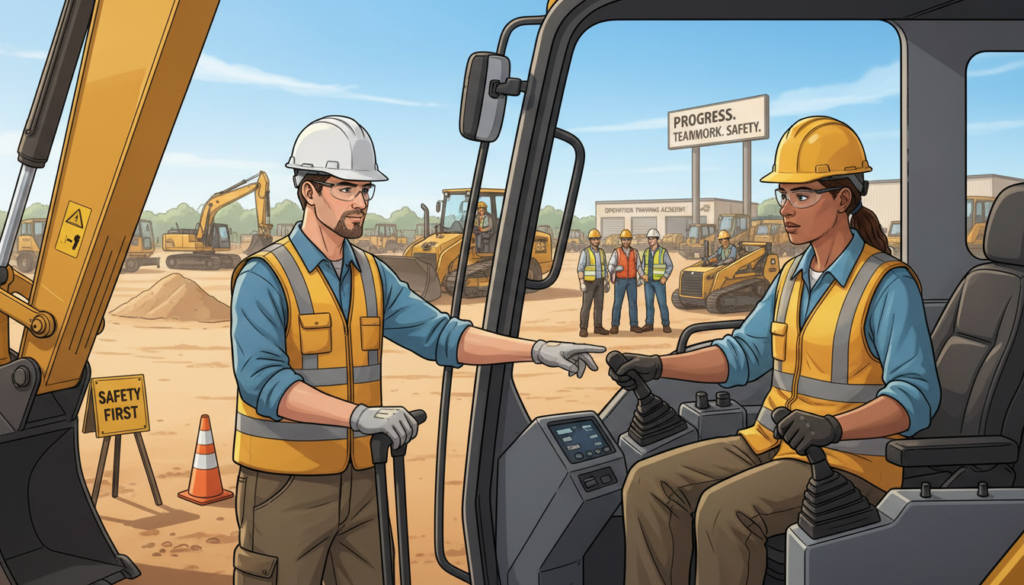
Essential Milestones to Achieve
We recommend tracking these important checkpoints throughout your training:
- Complete all classroom instruction on safety protocols and equipment specifications
- Accumulate minimum required operating hours (typically 40-100 hours depending on equipment)
- Pass practical demonstrations with qualified instructors
- Maintain attendance and participation records
- Successfully complete written knowledge assessments
- Obtain your official certification document
By following this structured approach, you position yourself for success in your new career field while ensuring you meet all industry standards and regulatory requirements.
Exploring Free Vocational Training for Heavy Equipment
We believe that quality education should be within reach for everyone. That’s why we’re committed to helping you discover affordable pathways into the heavy equipment industry. Getting started in this field doesn’t require spending thousands of dollars on training. Many programs across the nation offer real skills without the heavy price tag.
The construction and transportation industries need skilled operators now. Your opportunity to join these fields is closer than you think. Let’s walk through how you can access the training you need to launch your career.
Finding Free Heavy Equipment Operator Courses Available in the USA
Free heavy equipment operator courses available in the USA exist in every region. You can find them through community colleges, government workforce programs, and nonprofit organizations. These courses teach you the basics of operating bulldozers, excavators, and other machinery.
Start your search by checking your local workforce development office. They often partner with training centers to offer free vocational training for heavy equipment. You can also explore:
- State vocational rehabilitation programs
- Veterans’ training benefits and support services
- Community action agencies in your area
- Union apprenticeship programs
- County extension offices
Benefits of Accessible Skill Development
When training is free, you gain real advantages. You build confidence without debt stress. You learn from experienced instructors who know what employers want. Many programs include job placement help after you finish.
Accessible education means you can test your interest before committing money. You discover if heavy equipment operation matches your skills and goals. You network with classmates and instructors who work in the industry. These connections often lead to job opportunities.
| نوع التدريب | Time Required | يكلف | Job Placement Support |
|---|---|---|---|
| Community College Programs | 3-6 months | Free to low-cost | نعم |
| Workforce Development Courses | 2-4 months | حر | نعم |
| Union Apprenticeships | 6-12 months | Free (paid while learning) | نعم |
| Veterans Programs | يختلف | Free with benefits | نعم |
Your pathway to a rewarding career in heavy equipment operation starts with taking the first step. Search for free vocational training for heavy equipment in your state today. You’ll be amazed at what’s available right in your community.
Essential Heavy Equipment Operator Training Programs
Choosing the right heavy equipment operator training programs is one of the most important decisions you’ll make for your construction career. We know that the right training will set you up for success on job sites across the United States. Your choice today will shape your earning potential and job opportunities for years to come.
When we look at quality training options, we focus on programs that blend classroom learning with hands-on experience. This mix helps you understand both the “why” and the “how” of operating heavy machinery. Real-world practice teaches you skills that textbooks alone cannot provide.
We recommend searching for programs that offer industry certifications recognized by major construction companies. These credentials prove to employers that you’ve met strict safety and skill standards. Many top contractors in the United States now require these certifications before hiring new operators.
Key Features to Look For
- Comprehensive classroom instruction on equipment mechanics and safety rules
- Hands-on training with actual heavy machinery
- Safety certifications that meet federal and state requirements
- Job placement assistance after graduation
- Flexible scheduling options for working adults
- Experienced instructors with real construction site experience
We encourage you to compare what different programs offer. Look at class sizes, equipment available, and instructor qualifications. The best heavy equipment operator training programs invest in keeping their equipment modern and their teaching methods current with industry needs.
Your investment in quality training pays off quickly. Most operators see job offers within weeks of completing their certification. We’re proud to help you find the path toward a rewarding career in construction.
Online Platforms for Professional Development
Building your skills as a heavy equipment operator goes beyond traditional classroom training. We recommend exploring digital learning platforms that offer affordable and flexible options to strengthen your technical knowledge. These online resources let you study at your own pace while earning credentials that employers value.
The best online platforms provide a mix of free courses, paid certifications, and professional development opportunities. Many of them partner with leading institutions to deliver quality education directly to your device. This approach works well when you combine online learning with hands-on field experience.
Utilizing Coursera for Technical Skills
Coursera stands out as a leader in online education, offering courses from top universities across the United States. We can access classes covering equipment operation, maintenance principles, and safety protocols. Many courses include video lessons, quizzes, and real-world scenarios that help us understand heavy machinery operations.
The platform lets us earn certificates upon completion. These credentials show employers that we’re serious about professional growth. Some courses on Coursera are free to audit, meaning we can learn the material without paying tuition.
- Access video lectures from industry experts
- Complete interactive assignments and projects
- Earn shareable certificates
- Learn on your schedule
Leveraging Alison for Vocational Certification
Alison provides completely free vocational courses and certifications. We can pursue programs specifically designed for equipment operators and construction professionals. The platform focuses on practical skills that directly apply to real job sites.
What makes Alison special is that all courses are genuinely free, from start to finish. We earn official certificates that demonstrate our commitment to employers in the construction and equipment operation fields. These certificates cost nothing and carry weight in hiring decisions.
| Platform Feature | كورسيرا | أليسون |
|---|---|---|
| يكلف | Free to audit; paid certificates available | Completely free |
| Course Types | University-level academic courses | Vocational and skill-based training |
| Certificate Value | High recognition from employers | Strong in vocational sectors |
| Learning Style | Structured with deadlines | Self-paced learning |
We benefit from combining these platforms with our hands-on training. Online courses build our theoretical foundation while field experience teaches us practical skills. This blend creates well-rounded professionals ready for heavy equipment operator positions.
Specialized Bulldozer Operator Certification Courses
Operating a bulldozer demands specific skills that go beyond basic heavy equipment knowledge. We understand that pursuing specialized bulldozer operator certification courses gives you a competitive edge in the construction industry. These programs teach you how to handle complex machinery while maintaining strict safety protocols on job sites.
When we look at quality training options, hands-on experience stands out as the most valuable component. We recommend choosing programs that provide real-time practice with actual bulldozers. This practical experience builds your confidence and prepares you for workplace challenges you will face as a professional operator.
Our team believes that certified bulldozer operators earn better salaries and receive more job opportunities. Employers trust operators who have completed formal training and earned recognized credentials. Your certification becomes proof that you can operate heavy equipment safely and efficiently on construction sites.
Key Benefits of Professional Certification
- Increased earning potential in the construction field
- Access to more job opportunities across different states
- Enhanced safety knowledge and accident prevention skills
- Better understanding of equipment maintenance procedures
- Recognition from employers and industry professionals
We encourage you to select programs accredited by recognized construction industry organizations. Quality bulldozer operator certification courses include classroom instruction, safety training, and extensive hands-on practice. This combination ensures you develop both theoretical knowledge and practical ability to succeed in your career.
Navigating Excavator Training Programs USA
Finding the right training path for operating heavy machinery requires careful planning. We understand that choosing among excavator training programs USA can feel overwhelming. The good news is that many quality options exist across the United States. We want to help you make an informed decision that fits your goals and schedule.
When you search for construction equipment operator schools, you’ll notice different approaches to teaching. Some schools focus on classroom learning. Others blend theory with practical work. We recommend looking for programs that match your learning style and career timeline.
Selecting the Right Construction Equipment Operator Schools
Picking a quality school matters. We suggest checking these important factors:
- Accreditation status and industry recognition
- Experience and qualifications of instructors
- Equipment availability and condition
- Job placement rates and student reviews
- Cost and financing options
- Class size and instructor-to-student ratio
We encourage you to contact schools directly. Ask about their curriculum. Request information about their equipment fleet. Find out how long graduates take to find jobs.
Hands-on Experience Requirements
Operating an excavator demands real-world practice. We know that classroom knowledge alone won’t prepare you for job sites. That’s why hands-on experience is critical.
| Training Component | Importance Level | Typical Hours |
|---|---|---|
| Safety protocols and regulations | Critical | 20-30 hours |
| Equipment operation and controls | Critical | 40-60 hours |
| Site assessment and planning | Essential | 15-25 hours |
| Maintenance and troubleshooting | Essential | 10-20 hours |
| Advanced techniques and specializations | Important | 15-30 hours |
We advise seeking schools that offer significant operator seat time. You need to develop muscle memory and understand how the machine responds to different terrain. Quality excavator training programs USA provide dozens of hours in the operator’s seat.
We believe investing time in proper training protects your safety and your future. The construction industry values operators with solid hands-on experience.
Crane Operator License Training Requirements
Getting your crane operator license training is a big step toward a rewarding career in construction. We understand that the path to becoming a certified crane operator involves meeting strict national and state requirements. These standards exist to keep you and your team safe on job sites. The process demands dedication, proper education, and hands-on experience.
The crane operator license training requirements vary by state, but federal regulations set the foundation for all programs across the United States. You must complete documented training hours that demonstrate your knowledge and practical abilities. Most states require between 24 to 200 hours of formal instruction, depending on the crane type you plan to operate.
We want to help you understand what you need to accomplish before taking your certification exam. Here are the key requirements you should know:
- Minimum age requirement of 18 years old
- High school diploma or GED equivalent
- Valid driver’s license
- Documented work experience hours on actual construction sites
- Passing a written knowledge exam
- Successful completion of practical skills assessment
- Medical clearance from a certified professional
Our crane operator license training programs teach you about load calculations, safety protocols, and equipment maintenance. You learn to identify hazards and respond to emergency situations. The hands-on portion of your training allows you to practice operating different crane types under professional supervision.
We recommend checking with your state’s licensing board for specific requirements in your area. Different states maintain different standards, so knowing your local rules helps you prepare correctly. Starting this journey now puts you on track for success in the construction industry.
Practical Backhoe Operator Certification Free Resources
Getting your backhoe operator certification doesn’t have to drain your wallet. We understand that training costs can add up fast, which is why we’re sharing practical ways to find quality learning materials at no expense. By using smart search strategies and tapping into community resources, you can build strong skills while keeping your budget in check.
Tips for Finding No-Cost Training Materials
Finding backhoe operator certification free resources requires knowing where to look. Start by checking your local vocational schools, as many offer free workshops or reduced-cost programs for residents. Government agencies like OSHA provide free safety guides and manuals that cover essential backhoe operation standards.
Online libraries and construction websites share industry manuals at no cost. YouTube channels run by equipment manufacturers deliver hands-on demonstrations. Local construction unions often post free study materials for members. Trade publications sometimes offer downloadable guides about equipment operation and safety protocols.
- Visit OSHA’s official website for free safety documentation
- Search library databases for construction equipment manuals
- Join online construction forums where members share study guides
- Contact equipment dealers for free instructional videos
- Access state workforce development programs
Preparing for Certification Exams
Smart exam prep starts with understanding what you’ll face. Review all free materials twice before test day. Create study groups with other aspiring operators to share knowledge and test each other. Practice written exams online using free mock tests available through construction education websites.
Focus on key topics: machine controls, safety procedures, load limits, and maintenance basics. Keep detailed notes while studying free resources. Set a realistic study schedule over several weeks. Contact your testing center for specific exam details and requirements.
| Study Method | Time Required | يكلف | Effectiveness |
|---|---|---|---|
| Online Free Guides | 40-50 hours | $0 | عالي |
| YouTube Tutorials | 30-40 hours | $0 | مرتفع جداً |
| Library Resources | 35-45 hours | $0 | عالي |
| Practice Mock Exams | 20-25 hours | $0 | مرتفع جداً |
Success comes from dedication and using available resources wisely. Start your exam preparation early, stay organized, and take advantage of every free tool at your disposal.
Advancing Your Career with Forklift Operator Training Courses
Growing your career in the heavy equipment industry requires building a strong foundation of skills. We understand that adding certifications to your resume opens doors to better job opportunities and higher earning potential. One powerful way to boost your employability is by completing forklift operator training courses that provide formal certification.
Warehouses, distribution centers, and construction sites across the United States require certified forklift operators. Getting certified shows employers that we take our profession seriously and meet industry safety standards. This credential becomes valuable when we apply for positions in logistics, manufacturing, and retail operations.
Why Forklift Certification Matters
Employers prefer workers with verified training credentials. When we invest in forklift operator training courses, we demonstrate commitment to workplace safety and professional development. This certification often becomes a requirement for advancement into supervisory roles.
- Increases job opportunities in multiple industries
- Qualifies us for higher-paying positions
- Demonstrates safety awareness and responsibility
- Enhances our professional reputation
- Supports career advancement and promotions
Building Your Competitive Edge
We encourage you to view certification as an investment in our future. Completing forklift operator training courses takes relatively little time compared to the long-term career benefits. Most programs finish within a few days, allowing us to start applying our new skills immediately.
“Skills certifications separate us from other job candidates and prove we’re ready for greater responsibilities.”
By adding this versatile qualification to our professional toolkit, we position ourselves for faster career growth and better job security in the competitive equipment operation field.
خاتمة
Your journey to becoming a certified heavy equipment operator is within reach. This guide has walked you through every step of the process. From understanding the industry landscape to exploring specialized training in bulldozers, excavators, cranes, and backhoes, you now have a clear roadmap to follow.
Free resources like Coursera and Alison make professional development affordable and accessible. You can gain real skills without breaking your budget. Selecting the right training program that matches your goals puts you in the best position for success. Hands-on experience and proper certification matter in this field.
Safety and continuous learning will be your greatest tools as you move forward in your career. The heavy equipment operating field in the United States offers solid job prospects for those who commit to their training. Your dedication to mastering these skills opens doors to a rewarding and stable profession. Start your training today and build the foundation for a strong future.
