
Anúncios
We understand that starting a career in automotive repair can feel overwhelming.
The path from beginner to professional technician involves many choices and decisions.
Our step-by-step guide to mechanics training and certification programs will walk you through each stage of your journey.
You’ll discover the best educational options and licensing requirements across the United States.
This comprehensive roadmap breaks down complex information into clear, manageable steps.
Anúncios
We’ll help you understand degree programs, certification exams, and state-specific requirements.
Whether you’re just starting or looking to advance your skills, this guide gives you the tools you need for success in the automotive industry.
Our step-by-step guide to mechanics training and certification programs covers everything you need to know.
Anúncios
From classroom learning to hands-on shop experience, we break down each part of your training journey.
You’ll learn about apprenticeships, degree programs, and the specific certifications that matter most in today’s job market.
We’re excited to help you build a strong foundation for your automotive career. By following this guide, you’ll gain confidence in your educational choices.
You’ll understand what employers want and how to stand out in the competitive field of automotive repair.
Understanding the Step-by-Step Guide to Mechanics Training and Certification Programs
Starting your journey in automotive repair requires understanding what quality education looks like. We want to help you navigate the world of mechanics training programs so you can make informed decisions about your career path.
The foundation of becoming a skilled technician begins with choosing the right educational approach that matches your goals and learning style.
Accredited mechanics training programs across America follow strict guidelines set by industry organizations. These standards ensure that students receive education meeting modern repair shop expectations.
When you enroll in an accredited program, you gain access to current curriculum, experienced instructors, and equipment used in real-world shops. This combination prepares you for success from day one on the job.
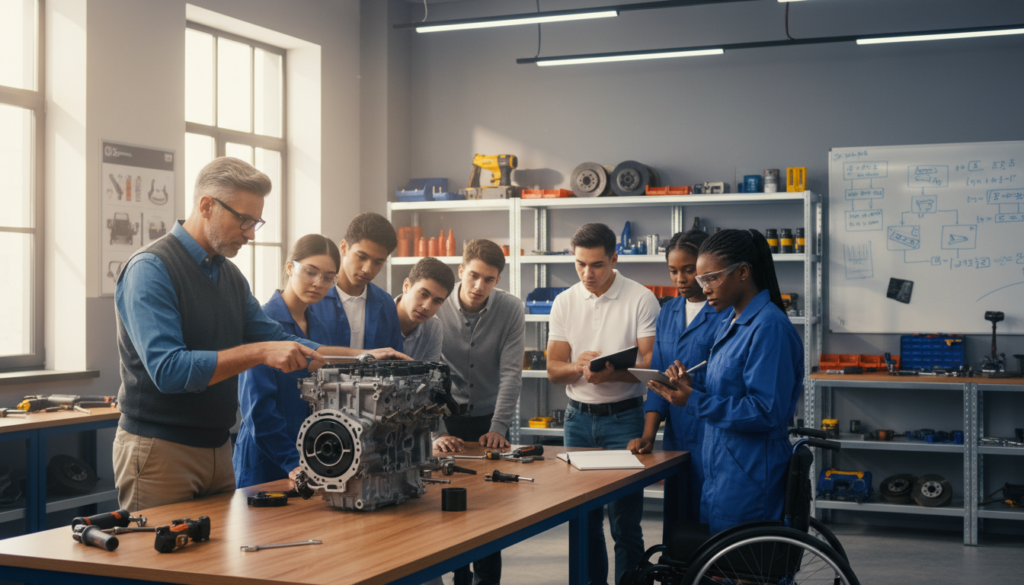
Quality training blends two essential components. Classroom instruction teaches you the theory behind automotive systems. Shop time allows you to apply that knowledge with actual vehicles and tools. We believe this balance creates confident, capable technicians ready for any challenge.
Key Components of Strong Training Programs
- Experienced instructors with real shop backgrounds
- Updated equipment matching industry standards
- Flexible scheduling for working students
- Small class sizes for personalized attention
- Job placement assistance after graduation
Understanding your options helps you select a program that fits your situation. Different paths lead to the same destination, and the right choice depends on your circumstances.
| Program Type | دورانیہ | کے لیے بہترین | لاگت کی حد |
|---|---|---|---|
| کمیونٹی کالج | 2 years | Career changers wanting degrees | $5,000-$15,000 |
| Trade School | 6-12 months | Quick entry into workforce | $10,000-$20,000 |
| Apprenticeship | 4-5 years | Hands-on learners earning wages | Paid while learning |
We encourage you to research programs in your area and speak with graduates about their experiences. Your investment in quality education pays dividends throughout your career in the automotive industry.
Exploring Automotive Technology Degree Programs
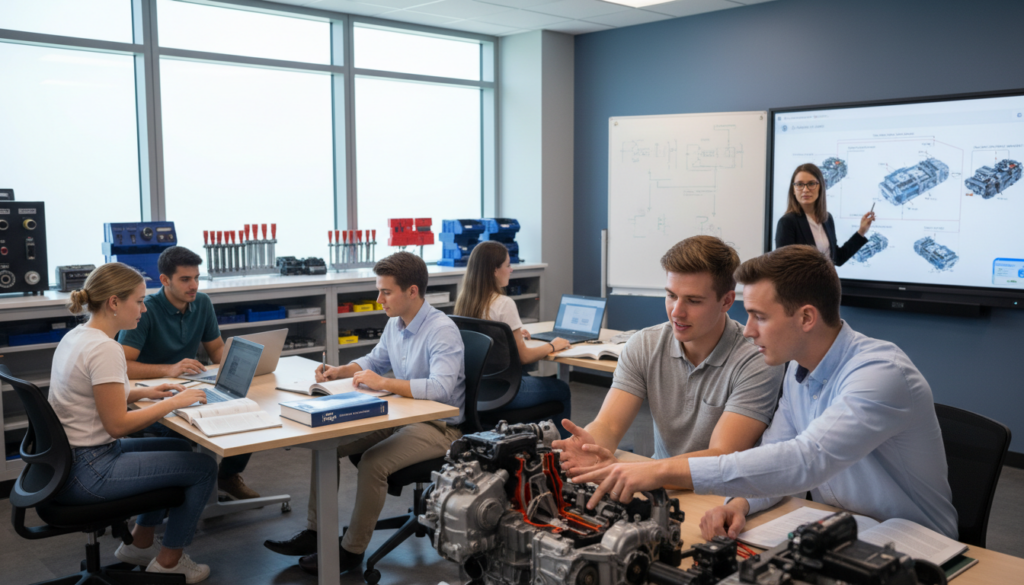
When you decide to build a career in automotive repair, selecting the right educational path matters. Automotive technology degree programs offer you structured learning that combines classroom instruction with hands-on training. These programs help you gain the skills and knowledge needed to succeed in today’s competitive automotive industry. Whether you dream of working at a major dealership like Ford or Toyota, or at an independent shop, the right degree sets you up for success.
Let us walk you through the key decisions you’ll make when choosing your training route. You’ll discover what makes certain programs stand out and how to pick one that matches your career goals.
Choosing the Right Associate Degree
An associate degree in automotive technology gives you a strong foundation in two years. This path is faster than a four-year degree yet deeper than a certificate program. We recommend looking at programs accredited by organizations like ASE (Automotive Service Excellence) to ensure quality education.
When comparing programs, consider these important factors:
- Program length and class schedule flexibility
- Lab equipment and shop facilities
- Instructor certifications and experience
- Job placement rates after graduation
- Internship and apprenticeship opportunities
- Tuition costs and financial aid options
Core Subjects in Technical Education
Every solid automotive technology degree includes essential courses that prepare you for real-world work. These subjects form the backbone of your technical skills and knowledge.
| Core Subject Area | What You’ll Learn | کیوں یہ اہمیت رکھتا ہے۔ |
|---|---|---|
| Engine Performance | How engines work, fuel systems, ignition systems | Most repairs involve engine issues |
| Electrical Systems | Batteries, alternators, starters, wiring | Vehicle electrical problems are common |
| Brake Systems | Brake components, hydraulics, safety features | Critical for vehicle safety |
| Transmission and Drivetrain | Manual and automatic transmissions, differentials | Complex systems requiring specialized knowledge |
| Heating and Air Conditioning | HVAC systems, refrigerants, diagnostics | High-demand service area |
| Diagnostics and Troubleshooting | Using scan tools, reading trouble codes | Essential skill for all technicians |
Beyond these core classes, you’ll study mathematics, blueprint reading, and computer applications. Modern vehicles rely heavily on computers and electronics, so you’ll spend significant time learning diagnostic equipment and software.
When you complete an automotive technology degree program, you gain hands-on experience in real shop environments. You’ll work on actual vehicles, not just simulators. This practical training gives you confidence when you start your first job.
Essential Automotive Technician Certification Requirements
Getting certified as an automotive technician opens doors to better job opportunities and higher earnings. Before you can earn your credentials, you need to understand what the automotive technician certification requirements actually are. These requirements vary based on the type of certification you want to pursue, but most follow similar patterns. We want to help you navigate this process by breaking down what you need to know before taking that important step.
The path to becoming a certified technician starts with understanding the basic prerequisites. Most certification programs require you to have hands-on experience working in an automotive shop. This experience helps you learn real-world skills that classroom study alone cannot provide.
Let us walk you through the core automotive technician certification requirements you will encounter:
- High school diploma or GED equivalent
- Minimum of two to five years of hands-on shop experience
- Completion of an automotive training program or degree
- Valid driver’s license
- Passing score on ASE certification exams
- Payment of examination fees
Experience matters greatly in this field. Many certification bodies require you to document your work history carefully. You will need to show proof of employment and specific tasks you completed. Keep records of the types of repairs you performed, the vehicles you worked on, and the time spent on each job category.
Understanding these automotive technician certification requirements early in your career helps you plan better. You can align your training with what certification bodies expect. This preparation makes the certification process smoother and increases your chances of passing exams on your first attempt.
Different certifications have different requirements. Some certifications focus on general automotive repair, while others specialize in specific areas like diesel engines or electrical systems. Research the certification that matches your career goals, and verify all requirements with official certification organizations.
Navigating the ASE Certification Process
The National Institute for Automotive Service Excellence sets the standard for technician skills across the United States. We understand that earning your certification takes dedication and preparation. This section walks you through every step of becoming an ASE-certified technician. You’ll learn how to register, study effectively, and keep your credentials current throughout your career.
Preparing for National Exams
Getting ready for your ASE exams requires a solid study plan. The ASE certification process involves multiple tests that cover different vehicle systems and repair areas. We recommend starting your preparation at least three months before your test date.
Here’s what you need to do:
- Register on the official ASE website with your work history documentation
- Choose which certification test matches your specialty area
- Gather study materials from trusted sources like ASE practice tests
- Review technical manuals and repair guides specific to your field
- Take practice exams to identify weak areas
We suggest joining study groups with other technicians. Discussing tough topics with peers helps you understand complex concepts better. Many vocational schools offer free study sessions before exam dates.
Maintaining Your Professional Credentials
Earning your certificate is just the beginning. We want you to know that keeping your credentials active requires ongoing commitment. ASE certifications remain valid for five years from your test date.
| Maintenance Option | Requirements | لاگت کی حد |
|---|---|---|
| Retesting | Pass the same exam again before expiration | $150-$200 per test |
| Continuing Education | Complete approved training courses | $100-$300 per course |
| Work Experience Renewal | Document five years of relevant work | $50 renewal fee |
We encourage you to stay current with industry changes. Attend manufacturer training seminars and earn continuing education credits. These activities keep your skills sharp and show employers that you’re committed to excellence.
Finding Free Online Learning Resources
We understand that staying current with automotive technology requires continuous learning beyond your formal training programs. The good news is that plenty of free online platforms can help you build skills at your own pace. These resources work perfectly alongside your certification courses and apprenticeships, giving you extra knowledge when you need it most.
Many learners struggle to find quality educational materials without spending money. Web-based platforms have changed this by offering free courses from industry experts. You can access lessons about engine repair, electrical systems, and diagnostic tools from your computer or phone whenever you have spare time.
Here are some excellent platforms we recommend for building your automotive knowledge:
- Coursera offers free audit options for courses developed by major companies like Google and IBM, covering foundational technical skills
- Alison provides free certificate courses specifically focused on automotive repair and maintenance fundamentals
- Khan Academy teaches math and physics concepts that support your understanding of mechanical principles
- YouTube channels dedicated to automotive repair offer step-by-step demonstrations of common repair procedures
These platforms let you learn at your own speed without pressure. You can review difficult topics multiple times and skip ahead when you feel confident. Many offer certificates upon completion, which looks great on your resume.
We suggest mixing these free resources with your formal training. Use them to refresh your memory before ASE exams or to explore new technologies your instructor mentions. Taking control of your education path shows employers that you’re serious about becoming a skilled technician.
Benefits of Mechanic Apprenticeship Opportunities
Mechanic apprenticeship opportunities offer a powerful way to launch your career in the automotive industry. These programs combine classroom learning with real-world experience in professional shop environments. You get paid while you learn from experienced technicians who understand the trade inside and out. This approach bridges the gap between textbook knowledge and the skills you need to succeed on the job.
An apprenticeship puts you in front of actual vehicles, real tools, and practical problems that need solving. You won’t just read about engine repair or brake systems. You’ll work on them yourself under expert guidance. This type of learning sticks with you far better than classroom theory alone.
Learning Through Hands-on Experience
Working directly with master technicians teaches you skills that schools cannot fully replicate. You learn the right way to use industry-standard tools from day one. You understand why certain procedures matter for safety and quality work. You build confidence by completing real repair jobs that customers depend on.
- Work with current automotive technology and equipment
- Gain certification while earning a paycheck
- Develop problem-solving skills through real scenarios
- Build a professional network in your local area
Connecting with Local Repair Shops
Finding the right apprenticeship starts with connecting with repair shops in your community. Visit local garages, dealerships, and independent repair centers. Talk to shop managers about their apprenticeship programs. Many shops actively seek motivated young people willing to learn the trade.
Building relationships with shop owners opens doors to mentorship and steady employment. You’ll learn what customers expect and how professional shops operate daily. These connections often lead to long-term career opportunities in your area.
Mastering the Diesel Technician Training Pathway
The job market for diesel technicians is growing fast. Skilled professionals in this field earn strong salaries and enjoy steady employment opportunities. We want to help you explore the diesel technician training pathway, which differs from standard automotive programs. This specialized path focuses on heavy-duty engines, fuel injection systems, and complex hydraulic networks found in trucks, construction equipment, and industrial machinery.
Becoming a diesel technician requires dedication to learning systems that go beyond basic car repair. You will study advanced topics that prepare you for real-world challenges in the industry. The diesel technician training pathway includes intensive coursework designed to build your expertise in this demanding field.
What Makes Diesel Training Different
Diesel systems operate under different principles than gasoline engines. The compression ignition process, fuel pressure requirements, and emission control systems demand specialized knowledge. You will work with equipment from companies like Cummins, Detroit Diesel, and Duramax to gain hands-on experience.
- High-pressure fuel injection systems
- Turbocharger technology and boost control
- Pneumatic and hydraulic brake systems
- Engine diagnostics using advanced scanners
- Emissions systems and compliance standards
Finding Quality Training Programs
We recommend researching schools accredited by the National Association of Diesel Educators and Technicians (NADET). Programs typically run between six months and two years. Look for training centers that offer both classroom instruction and shop floor experience with actual diesel equipment.
| تربیت کی قسم | دورانیہ | فوکس ایریا |
|---|---|---|
| Certificate Program | 6-12 months | Basic diesel engine repair |
| Associate Degree | 2 years | Comprehensive diesel systems |
| Advanced Certification | 3-6 months | Specialized systems (turbos, emissions) |
Your path to becoming a diesel technician opens doors to stable, well-paying work. Schools with strong industry partnerships place graduates quickly into rewarding positions.
Evaluating Automotive Repair School Curriculum
Picking the right school for your mechanic training matters a lot. We want to help you understand what makes a strong automotive repair school curriculum stand out from the rest. A quality program balances classroom learning with real-world shop experience. When you are looking at different schools, pay close attention to how they structure their courses and what tools they provide to students.
A well-designed automotive repair school curriculum prepares you for the daily challenges you will face in professional repair shops. You should learn both the theory behind how vehicles work and the practical skills needed to fix them. The best schools understand that students need both types of learning to become skilled technicians.
Hands-on Shop Time Versus Classroom Theory
We believe that successful training requires a mix of both classroom instruction and hands-on practice. Classroom time teaches you the why behind repairs. Shop time shows you the how. Look for programs that offer at least 50% hands-on experience. This split gives you solid knowledge and practical skills.
- Classroom theory covers engine systems and diagnostic principles
- Shop time develops your ability to use tools and troubleshoot problems
- Blended learning helps you apply what you study in real situations
- Instructor feedback improves your technique and confidence
Industry Standard Tools and Equipment
The tools and equipment available at your school make a real difference in your training quality. We recommend checking whether the school has modern diagnostic scanners, hydraulic lifts, and current vehicle models. These resources let you practice with technology you will use in actual repair shops.
| Equipment Type | کیوں یہ اہمیت رکھتا ہے۔ | کیا تلاش کرنا ہے۔ |
|---|---|---|
| Diagnostic Scanners | Reads computer codes in modern vehicles | Current software versions, multiple vehicle brands |
| Hydraulic Lifts | Safely raises vehicles for under-car work | Various lift types, proper safety features |
| Engine Stands | Holds engines during rebuilds | Heavy-duty construction, stable base |
| Air Compressors | Powers pneumatic tools used daily | Adequate PSI rating, multiple stations |
Schools that invest in quality equipment show they care about preparing you for real jobs. You will feel more confident entering the workforce when you trained on tools similar to those in professional shops. Ask each school what equipment they have and how recently they updated it.
Tips for Becoming a Certified Mechanic
Becoming a certified mechanic demands dedication, hard work, and a real passion for automobiles. The path to success involves more than just passing tests. You need to develop a strong work ethic and commit to continuous learning throughout your career. We want to help you build the right mindset and tools to thrive in this rewarding field.
Success in this industry starts with smart time management. Create a study schedule that works with your job and life. Break your learning into small chunks rather than cramming everything at once. This approach helps your brain retain information better and reduces stress.
Master Your Study Habits
Developing strong study skills is crucial for becoming a certified mechanic. Use practice tests to identify weak areas. Join study groups with other aspiring technicians. Teaching others helps you learn better. Take notes by hand instead of typing—research shows this improves memory and understanding.
- Create a quiet study space free from distractions
- Review material regularly rather than one time only
- Use diagnostic software to practice real-world scenarios
- Read manufacturer repair manuals and technical documents
- Watch instructional videos from trusted sources like YouTube channels focused on automotive training
Build Your Professional Reputation
Your reputation matters as much as your credentials. Be reliable, honest, and precise in your work. Show up on time. Admit when you do not know something, and take steps to learn it. Customers and employers remember technicians who stand behind their work.
| Professional Quality | How to Develop It | Impact on Career |
|---|---|---|
| وشوسنییتا | Complete jobs on schedule with quality results | Builds customer trust and loyalty |
| Precision | Follow service manuals and specifications exactly | Reduces comebacks and warranty claims |
| Communication | Explain problems clearly to customers | Increases customer satisfaction ratings |
| مسلسل سیکھنا | Stay updated with new technology and methods | Opens doors for promotions and specialization |
Approach Complex Diagnostic Problems
Problem-solving is at the heart of automotive work. When facing a tough diagnostic challenge, start with the basics. Check service bulletins and technical resources. Do not guess—use your tools properly. Scan codes, test components, and follow the evidence. Keep detailed notes about what you tried and what you discovered. This method builds your skills and helps future technicians.
- Read the customer complaint carefully
- Perform basic checks and inspections
- Use diagnostic equipment correctly
- Reference repair manuals and online databases
- Document your findings thoroughly
- Verify your repair solved the problem
Becoming a certified mechanic opens doors to a stable, well-paying career. The investment in your education and skills pays off through job security, growth opportunities, and personal satisfaction. Stay focused on your goals, embrace challenges as learning chances, and remember that every expert technician started exactly where you are now.
Understanding Professional Mechanic Licensing Steps
Getting your mechanic license is an important step in your career. The professional mechanic licensing steps vary depending on which state you work in. We want to help you understand what you need to do to become a licensed mechanic in your area. Each state has different rules and requirements that you need to follow. Learning about these requirements early will help you plan your career path better.
Before you start your licensing journey, research what your state requires. Some states need you to pass exams. Others want you to have specific work experience. Many states use the ASE certification as part of their licensing process. We recommend visiting your state’s Department of Motor Vehicles or licensing board website to get accurate information about professional mechanic licensing steps in your area.
State Specific Regulations
Licensing requirements differ across the United States. What you need in Texas may not be the same as what you need in California. We encourage you to check your state’s specific rules because they can change. Most states require you to have work experience and pass written exams.
| State | Work Experience Required | امتحان کی قسم | License Renewal |
|---|---|---|---|
| کیلیفورنیا | 18 months minimum | ASE Certification | Every 3 years |
| ٹیکساس | 2 years minimum | State-specific exam | Every 2 years |
| فلوریڈا | 24 months minimum | ASE + State exam | Every 3 years |
| نیویارک | 1 year minimum | ASE Certification | Every 2 years |
Some states do not require formal licensing for all mechanics. We suggest you contact your local licensing board to understand the exact professional mechanic licensing steps for your area. Many states recognize ASE certification as proof of competency.
Building Your Professional Portfolio
Your professional portfolio shows employers what you can do. We recommend keeping records of all your training and work experience. Include copies of your certifications and ASE exam results. Write down the types of vehicles you have worked on and the repairs you completed.
- Keep all certification documents in one place
- Document your work experience with dates and job descriptions
- Collect letters of recommendation from past employers
- Track any specialized training you complete
- Save photos of complex repairs you finished
- Record safety certifications and first aid training
A strong portfolio helps you when applying for new jobs or promotions. We know that shop owners want to see proof of your skills and experience. Having organized documentation of your professional mechanic licensing steps and accomplishments makes you a better candidate for quality positions in the automotive industry.
Advancing Your Career Through Specialized Training
Once you have established yourself as a certified mechanic, the next step is to advance your career through specialized training. Building on your foundational knowledge opens doors to higher-paying positions and greater job satisfaction. We encourage you to explore niche areas that interest you and match your long-term career goals.
Specialized training programs focus on emerging automotive technologies and systems that represent the future of the industry. By developing expertise in these areas, you position yourself as a valuable asset to repair shops and dealerships. Your commitment to continuous learning sets you apart from competitors and demonstrates your dedication to professional growth.
- Hybrid vehicle repair and electric vehicle systems
- Advanced driver-assistance systems (ADAS) calibration
- Performance tuning and engine optimization
- Manufacturer-specific training programs
- Diesel engine specialization
- Transmission and drivetrain expertise
Manufacturer-specific training programs deserve special attention. Companies like General Motors, Ford, Toyota, and BMW offer certification courses that make you an expert in their particular vehicle brands. These certifications boost your credibility with customers and employers alike.
| Specialization Area | Average Salary Increase | Training Duration | Employer Demand |
|---|---|---|---|
| Hybrid/Electric Vehicle Systems | 15-25% | 40-80 hours | بہت اعلیٰ |
| ADAS Calibration | 20-30% | 60-100 hours | بہت اعلیٰ |
| Performance Tuning | 10-20% | 50-120 hours | اعلی |
| Diesel Specialization | 18-28% | 80-150 hours | بہت اعلیٰ |
Continuous education represents the hallmark of top-tier technicians who stay ahead of industry trends. Many shops offer tuition reimbursement programs for employees who pursue additional certifications. We recommend speaking with your current employer about these opportunities before enrolling in specialized courses.
Online platforms and community colleges provide affordable specialization options. Many programs combine classroom instruction with hands-on practice. This blend ensures you understand both theory and real-world application. Your investment in specialized training pays dividends throughout your career in increased earning potential and job security.
نتیجہ
You now have a clear roadmap to build a rewarding career as a professional mechanic. We’ve walked you through every stage of your journey. Starting with automotive technology degree programs, moving through ASE certification requirements, and exploring apprenticeship opportunities—each step builds your skills and knowledge. Your dedication to education sets the foundation for long-term success in the automotive industry.
The path to becoming a certified mechanic demands hard work and commitment. Whether you choose an associate degree, pursue hands-on training, or specialize in diesel technician work, your choice matters. Online resources, repair shop connections, and quality curriculum all play vital roles in your development. State licensing steps and professional credentialing show employers that you meet industry standards. Building your professional portfolio demonstrates your expertise and reliability.
The automotive world keeps changing every day. New technologies emerge regularly in the repair industry. Your willingness to learn and adapt ensures you stay competitive and valuable. We encourage you to use this guide as your foundation. Seek out mentors in local repair shops. Stay current with certifications and specialized training. The investment you make in yourself today becomes the career success you enjoy tomorrow.
Your journey in automotive service is just beginning. Take these steps seriously, stay focused on your goals, and embrace every learning opportunity. The automotive industry needs skilled professionals who care about quality work. That professional could be you. We’re proud to support your mission to achieve excellence in your mechanical career.
